What Is the Proper Way to Measure Current?
Why is it necessary to mensurate current? Reasons, methods, and precautions
Overview
You tin't see electricity menstruum with your own eyes. Consequently, specially designed measuring instruments are necessary in guild to measure out properties such equally current. Simply why is it necessary to measure electric current in the first identify? And how is that achieved?
This page offers a detailed explanation of reasons for measuring current and methods for using associated instruments.
Necessity of measuring electric current
Electronic devices are extremely frail and precise. Consequently, many devices need to be inspected regularly, and maintenance is cardinal. If there were no measuring instruments, it would be difficult to pinpoint problems during maintenance and when equipment breaks down. For this reason, measuring current is an important part of maintaining electronic devices and pinpointing the causes of malfunctions and failures.
There are a number of measuring instruments that tin can be used to measure out current. The following three are the virtually frequently used:
- Digital multimeters
- Current probes (viewing current probe voltage output with an oscilloscope)
- Clamp meters
-
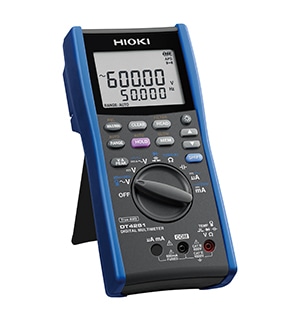
Digital multimeters
-
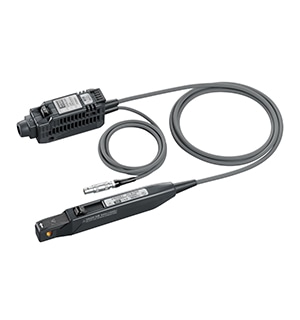
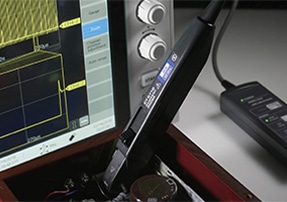
Electric current probes
-
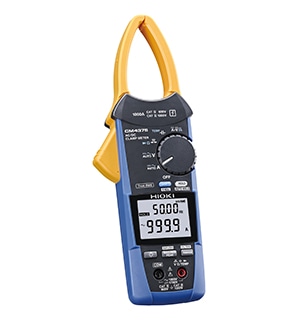
Clamp meters
Each of these instruments tin be used to mensurate current. It'southward important to choose the best instrument for your application.
This page explains how to measure electric current using each type of musical instrument.
How to measure electric current with a digital multimeter
A digital multimeter is an instrument that provides functionality for making basic measurements of electrical circuits, from current to voltage and resistance. Various types are available, ranging from big models to card-style devices, and they're used in a variety of electricity measurement scenarios.
Near digital multimeters have a rotary switch for changing functions, and then the starting time step is to set the instrument to the current part.
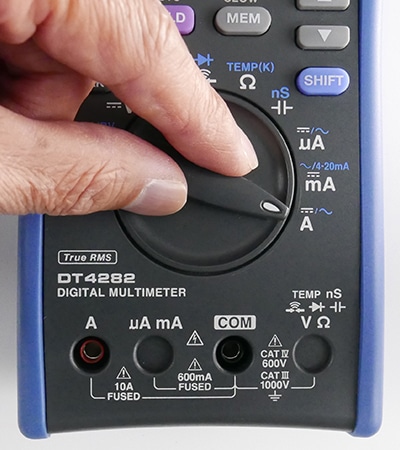
Then, connect the test leads' black (negative) terminal to "COM" and the red (positive) terminal to "A." When connecting the test leads to the circuit, connect the black lead to the power supply's negative side and the crimson pb to the load side and then that the instrument is in series with the circuit.
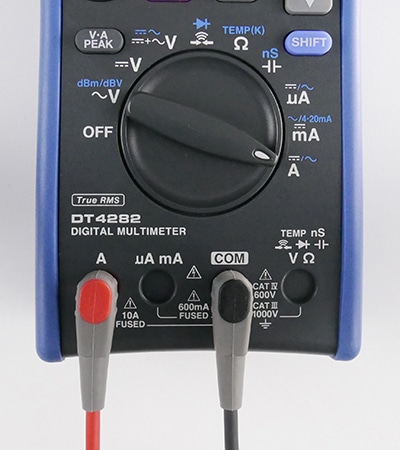
Caution is necessary as inputting a voltage while the exam atomic number 82 is inserted into the "A" last could harm the digital multimeter. Consequently, it's good practice to turn off power to the circuit under measurement so that a voltage is not applied inadvertently. Then connect the current in serial with the measurement terminals and turn the power dorsum on.
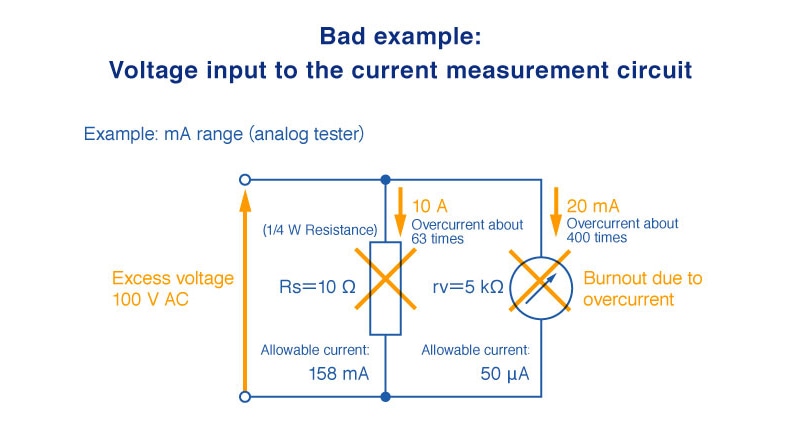
How to measure electric current with a current probe
A current probe is a tool that allows an instrument such equally an oscilloscope to measure out electric current waveforms by converting current into voltage. They're useful in a wide range of current measurement scenarios because they allow bespeak observation from outside insulation (without cutting the cable or other conductor), and considering they tin accommodate currents of diverse magnitudes.
The following six types of electric current probes are available, and should be selected according to the application.
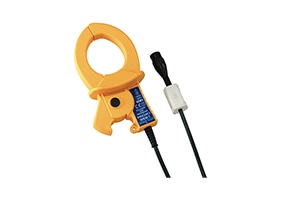
CT type
These current sensors are designed exclusively to measure Air-conditioning currents. They are comparatively cheap and do not require a power supply, although they cannot be used to measure out DC currents.
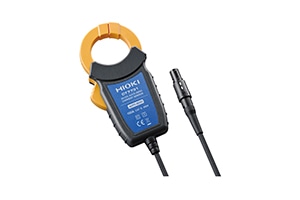
Hall chemical element type
These current sensors can be used to measure both AC and DC currents. They're inexpensive, but they suffer from disadvantages including comparatively poor precision and migrate acquired by temperature and fourth dimension, which makes them poorly suited to applications in which current must be measured over an extended period of time.
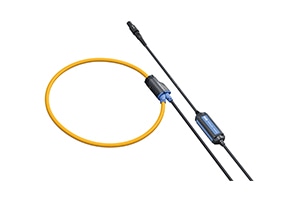
Rogowski type
These probes mensurate electric current by converting the voltage induced in an air cadre coil past the Air-conditioning magnetic field that occurs around the electric current being measured. They're inexpensive, and they can measure large currents since their lack of a magnetic cadre eliminates the event of magnetic saturation. Additionally, they don't suffer from the disadvantage of magnetic loss. Nevertheless, they're susceptible to the effects of dissonance and therefore poorly suited to high-precision measurement. Additionally, they take the disadvantage of not being able to measure DC currents due to the principle of their operation.
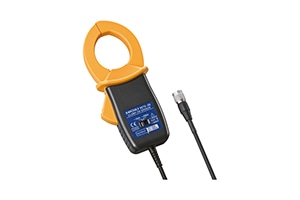
AC zero-flux blazon
These probes improve the characteristics of CT-type probes in the low-frequency band. Thanks to low stage error, they tin can make measurements beyond a wide frequency band, making them well suited to power measurement. All the same, they utilize the CT method and therefore cannot mensurate DC currents.
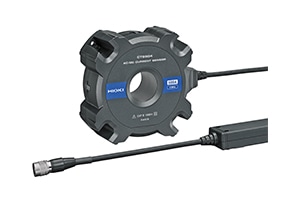
Ac/DC aught-flux type (Hall element detection type)
These sensors combine the CT method with a Hall element, allowing them to measure both DC and Air conditioning electric current.
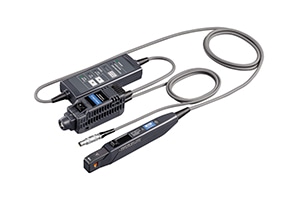
AC/DC nada-flux type (fluxgate detection type)
These sensors combine the CT method with a FG (fluxgate) element, allowing them to measure both DC and AC current.
Since the fluxgate exhibits an extremely small get-go drift across a wide temperature range thanks to its operating principle, it can achieve exceptionally accurate and stable measurements, making this type of electric current sensor ideal for pairing with high accuracy ability meters for uncompromising precision
How to measure out current with a clench meter
To measure current with a clamp meter, beginning gear up the rotary switch to "A". Then execute null adjustment and clamp the jaws across the cable. Since clamp meters can measure current simply by beingness clamped around a cable, they can also be used to check electric current values without cutting circuits. These instruments utilise the fact that the magnetic field that occurs when current flows is proportional to the magnitude of the electric current; by measuring that field, the current can be measured.
If a clamp meter is clamped around two round-trip wires, the magnetic fields will cancel each other out. Information technology'due south necessary to avoid clamping the meter effectually such pairs of wires, except when measuring leakage current.
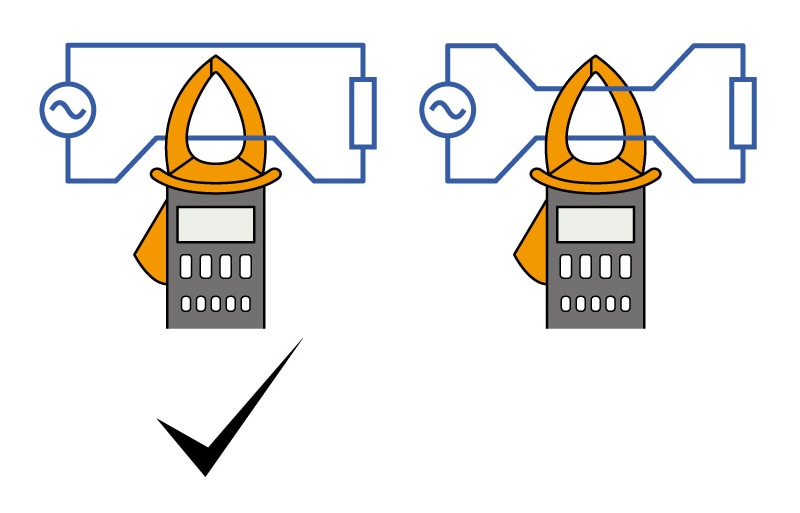
Since the magnetic field increases in proportion to the number of coil turns in the same direction around the clench's core, precision tin can be increased by calculation turns to the instrument to strengthen the magnetic field.
Choosing the best instrument for your awarding
Measuring instruments are necessary in lodge to mensurate properties such as current in order to maintain and pinpoint malfunctions in precise, delicate electronic instruments. Instruments such as digital multimeters, current probes, and clamp meters are often used to measure current. Why not try using an instrument that suits your requirements and purpose to measure current?
Related Products
Acquire More
-
How to Use a Digital MultimeterHow to Use a Digital Multimeter. Review of advantages and disadvantages
-
What is Electric Current?What is current? The difference between voltage and current, different types of current, and methods for measuring current
-
How to Use Clamp MetersReady to learn? Tips for using clench meters, related precautions, and more
-
How to Utilise Current ProbesLearn more than virtually how to use current probes. Review of basic methods and precautions
Source: https://www.hioki.com/global/learning/methods/current-measurement-methods.html

Post a Comment for "What Is the Proper Way to Measure Current?"